Bangladesh: Potato Crop Hits 11.5 Million Tonnes Against 9 Million Tonnes of Demand
ძირითადი მიღება
- 11.5 Mt record potato crop in Bangladesh in 2024-25 (BBS)
- 9 Mt estimated domestic demand for potatoes per year
- 3-4% of the potato crop in Bangladesh goes to processing
- 62,000 t of potatoes exported, a tiny share of the harvest
რატომ არის მნიშვნელოვანი
- ფერმერებისთვის
- Before planting more, secure cold-store space or a buyer; field prices of Tk 9-11/kg were below the Tk 14/kg average cost.
- პროცესორებისთვის
- Use the surplus: only 3-4% of an 11.5 Mt crop is processed, so raw material for flakes, chips or starch is plentiful.
- ტრეიდერებისთვის
- Build export channels; shipments of 62,000 t leave a surplus of about 2.5 Mt above domestic demand.
- მომწოდებლებისთვის
- Shift offers from yield inputs to storage and quality: growers already exceed demand and face thin margins.
- ინვესტორებისთვის
- Evaluate processing plants and modern cold stores; current processing capacity is only 70,000-80,000 t.
60-წამიანი შეჯამება
Bangladesh now grows far more potatoes than it can eat, store or sell abroad. Official statistics put the 2024 to 2025 crop at a record 11.5 million tonnes, 9% above the prior season, against home demand near 9 million tonnes. The FAO series confirms the long climb: volume has multiplied about 3.6 times since 2000 and yields have almost doubled to 23 t/ha. The surplus has consequences. Farm-gate prices of Tk 9 to 11 per kg sit below an average cost of Tk 14, cold rooms hold only about a third of the harvest, factories handle just 3 to 4% of output, and exports reached only 62,000 tonnes. Processors and exporters can access cheap raw material; seed and input firms face growers with thin margins. Caveat: the record volume, storage, processing and export figures come from a single newspaper report that cites official agencies, so they need confirmation.
Bangladesh harvested a record 1.15 crore tonnes (11.5 million tonnes) of potatoes in fiscal year 2024–25. The figure comes from the Bangladesh Bureau of Statistics (BBS), as reported by The Daily Star. Output rose 9% from 1.06 crore tonnes (10.6 million tonnes) a year earlier. Planted area grew 8% to 4.92 lakh hectares (492,000 ha).
FAOSTAT data, published by Our World in Data, confirm the scale. They show 10.60 million tonnes for 2024. In 2000, the country produced only 2.93 million tonnes. Output has grown about 3.6 times in 24 years. Average yield almost doubled, from 12.1 t/ha in 2000 to 23.2 t/ha in 2024.
A structural surplus
Domestic demand is around 90 lakh tonnes (9 million tonnes) per year, according to the same report. The 2024–25 crop was therefore about 2.5 million tonnes larger than demand. Field prices fell to Tk 9–11 per kg. The Department of Agricultural Extension (DAE) estimates the average production cost at Tk 14 per kg. In northern regions, costs were around Tk 20 per kg.
სამუშაო დღეებში. გამოწერის გაუქმება ერთი დაწკაპუნებით.
Storage, processing and exports cannot absorb it
Cold storage capacity has grown to about 35–40 lakh tonnes (3.5–4 million tonnes). That is roughly one-third of the harvest. Processing capacity is only 70,000–80,000 tonnes. The industry processes just 3–4% of output. Exports reached only 62,000 tonnes.
For comparison, the report cites processing shares of 60–65% in the Netherlands, Germany, France and the USA. India processes 5–7% and China 15%. The Food and Agriculture Organization estimates that more than a quarter of output in Bangladesh is lost after harvest, the report adds.
რატომ არის მნიშვნელოვანი
Bangladesh has solved the production problem but not the marketing problem. Each new record crop pushes farm prices below cost. Growers then face losses, and cold-store space becomes a bottleneck.
The gaps are clear: processing, exports and storage. For processors and exporters, cheap raw material is available in large volumes. For seed and input suppliers, the market is large, but growers’ margins are thin. Without new demand, further yield gains will mainly depress prices.
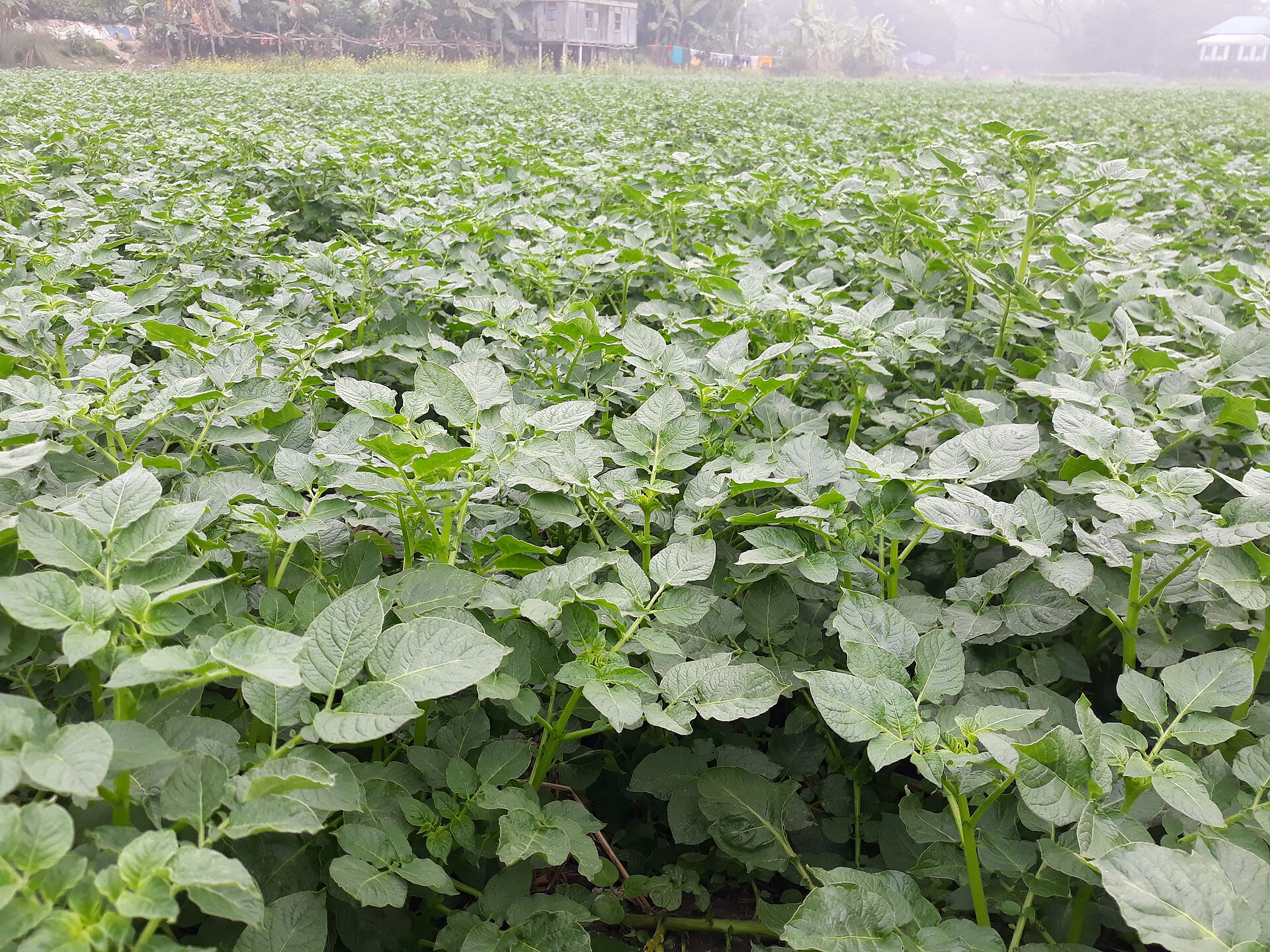
Photo: A potato field in Bangladesh (illustrative). কুউ পুলক / ვიკიპედია, CC BY-SA 4.0
გლობალური კარტოფილის მიმოხილვა
ხუთი საუკეთესო სიახლე, ფასები, დაავადებების შესახებ შეტყობინებები და ღონისძიებები. სამუშაო დღეებში დილაობით, რეკლამის გარეშე.
შემდეგი რა არის
The texts give no forecast for the 2025-26 crop. Without new processing or export capacity, the surplus is likely to repeat.
წყაროები
- The Daily Star (BBS, DAE data), 13.01.2026 — https://www.thedailystar.net/business/news/potato-paradox-just-another-curry-the-rice-plate-will-not-solve-the-price-problem-4067431
- FAOSTAT Our World in Data-ს მეშვეობით, კარტოფილის წარმოება — https://ourworldindata.org/grapher/potato-production
- FAOSTAT Our World in Data-ს მეშვეობით, კარტოფილის მოსავლიანობა — https://ourworldindata.org/grapher/potato-yields
ბმული ამ მასალაშია
- ქვეყანა
- Bangladesh
- განყოფილებები
- აზიასიახლეები - HUASHILგენერაციისსაწყობები
დაკავშირებული ისტორიები
თურქეთი: ნიგდეს ინსტიტუტი ჰიდროპონიკური სისტემიდან სუპერელიტურ მინიტუბერებს იღებს

ბელარუსი: კარტოფილის მოსავალი გეგმის 43%-ს აღწევს, მწარმოებლებმა 317 000 ტონა თხრიან